




Three More Voices From the Introduct Oman Office

We published the first part of this series last week. Three people from Ukraine, Azerbaijan, and Kazakhstan answered the questions every candidate asks before deciding whether to move to Muscat.
The response we heard most: “Where are the rest of the stories?”
Here they are. Three more colleagues, and a few more countries. The same honest answers.
What Moving to Oman Actually Costs You (Before It Gives Back)
Nurdaulet Nassyradinov arrived from Kazakhstan in September, which is among the hottest months in Muscat. His feedback of the first weeks is the most candid in this series:
“Finding an apartment, coordinating with agents and landlords, sorting out residency documents and banking, all while keeping up with work and preparing the training syllabus, was quite stressful.” – Nurdaulet Nassyradinov, Kazakhstan
The heat was real. The logistics competed with his work schedule. He names it directly because that honesty is more useful to you than polished feedback that skips the hard parts.
What he also says is this: “Looking back, it was a demanding start, but I’m glad to be here and gradually finding my rhythm in Muscat.” That rhythm comes. The first few weeks are the most concentrated form of the adjustment.
How Quickly the Unfamiliar Becomes Normal
Nurdaulet’s answer to the question about surprises is one of the most useful things in this series for someone on the fence about relocating:
“Probably how quickly everyday life starts to feel normal. Before moving, everything seemed unfamiliar, and there were a lot of things to figure out. But once you settle in and establish a routine, it becomes much easier.” Nurdaulet Nassyradinov
This tracks with what almost every colleague reports. The first two weeks feel like a lot. By week four, you have a regular restaurant, a route to work, and a rough sense of the city. By month three, Muscat is just where you live.
The relocation support Introduct provides during that early period is specifically designed to reduce the number of things you have to figure out at once. Documents, housing, banking: those are handled. You concentrate on the work and the adaptation.
Coming From Georgia: Two Perspectives
Ana Otkhozoria relocated from Georgia and gave us feedback that stands out for what it describes about the first weeks:
“The first weeks went much smoother than I expected. The team supported me fully with documents, visas, and all the paperwork, so the relocation was honestly so easy. I found my apartment myself, but I always knew I could ask the team if I needed help. That made settling in really stress-free.” – Ana Otkhozoria, Georgia
Her experience on paper involves the same steps as everyone else: a new country, new systems, and new routines. Her experience in practice was different because she felt supported rather than dropped into uncertainty.
She also gave us the clearest description of how Muscat compares to a fast European lifestyle:
“Moving from the fast European lifestyle to such a calm and safe place was the best decision I made. Locals really make you feel at home. Muscat is calm, comfortable, and surprisingly green. It’s the first place that truly felt like home for me.” – Ana Otkhozoria
That word “surprisingly” is worth noting. Most people expect a desert city. Muscat has more greenery than the geography implies, parks that are well-maintained, and a coastline that is genuinely beautiful. It is not what people picture from the outside.
What These feedback Have in Common
Six people. Five countries. The experiences differ in detail. What they share is a pattern worth naming.
- The first weeks are the hardest. The logistics, the climate, and the newness all arrive at once.
- The support structure from Introduct removes the most disorienting parts of that period.
- By the time the routine establishes, most people describe the move as one they would make again.
- The work is serious. National infrastructure projects move careers forward faster than internal tools or maintenance work.
- The city earns its reputation. The safety, the people, and the pace are real, not marketing.
Oman is not the right move for everyone. Some people need a fast-paced capital city environment to feel energized. Some people need proximity to family that Muscat cannot provide. Those are real constraints.
For the right person, this is one of the better career decisions you can make right now. The people in this series are the evidence.
💡 Before you decide
Read part one of this series for the first three pieces of colleague feedback: Working in Oman: What Tech Professionals Really Want to Know. Then visit our Oman office page for more on the team and projects.
More Articles

Working in Oman: What Tech Professionals Really Want to Know Before They Move Working in Oman: What Tech Professionals Really Want to Know Before They Move
Every week, someone asks us a version of the same question. The questions are not about the salary or the tech stack. It’s simpler and harder than that: What is it actually like to live in Oman? Moving to a country you have never visited, sometimes with your family, is not a small decision. Generic […]
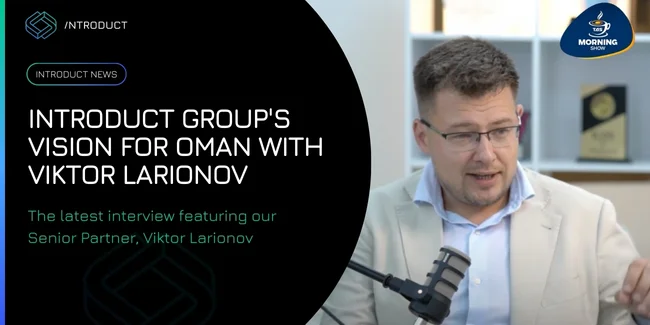
Introducing Introduct Group’s Vision for Oman with Viktor Larionov Introducing Introduct Group’s Vision for Oman with Viktor Larionov
We are thrilled to announce the release of our latest interview featuring our Senior Partner, Viktor Larionov.📹 Here, you’ll have a chance to dive deeper into Introduct’s journey, our approach to expanding our business. And, of course, you’ll dive deeper into our plans on nurturing Oman’s next generation of tech talent. Watch the interview with […]