


AI-Powered Custom Software: What Boards Need to Approve First
The development team is ready, the use case is defined, and a vendor is selected. And then the project hits a six-month delay because nobody asked the board who owns the data the AI will be trained on.
AI custom software development projects fail at the governance stage more often than the technical stage. The code is the easy part. The decisions that need to happen before the code are what most organizations underestimate.
AI custom software development requires four decisions that standard software projects do not: who owns the training data, who is accountable when the model is wrong, what the acceptable error rate is by use case, and which regulatory framework applies. None of these are technical questions. All of them create expensive delays or post-launch liability if left unanswered.
Why AI projects need different pre-approval than standard software
AI custom software development is the process of building proprietary software products that use machine learning models trained on your organization’s own data, as distinct from integrating a third-party AI API or deploying an off-the-shelf AI tool.
Standard custom software development requires scope approval, budget sign-off, and a delivery timeline. AI development requires all of that, plus decisions that touch data ownership, model accountability, output liability, and regulatory exposure.
Gartner projects that by 2026, more than 30% of enterprises will face at least one AI-related liability event. Most of those events trace back to decisions that were never formally made, only assumed.
Custom AI development vs. third-party AI API: which does your project need?
Before the board approves an AI development budget, one foundational question should be answered: does this use case require custom AI development, or can it be solved with an existing AI API?
| Feature / Criteria | Custom AI development | Third-party AI API | Off-the-shelf AI tool |
|---|---|---|---|
| Training data | Your own data | Provider’s data | Provider’s data |
| Model control | Full | None | None |
| Data privacy | High — data stays internal | Dependent on provider terms | Dependent on provider terms |
| Time to production | 3–12 months | Days to weeks | Days |
| Cost | High upfront, lower unit cost at scale | Low upfront, variable at scale | Subscription-based |
| Use when | Your use case requires proprietary data or competitive differentiation | Standard task with available training data (translation, sentiment, classification) | General productivity (summarisation, drafting, search) |
The board question is not “should we use AI?” It is “does our specific use case require a custom model, or will an existing one do?” Custom development is the right choice when the competitive advantage lies in the data, not just the capability.
The four decisions boards need to make before AI development starts
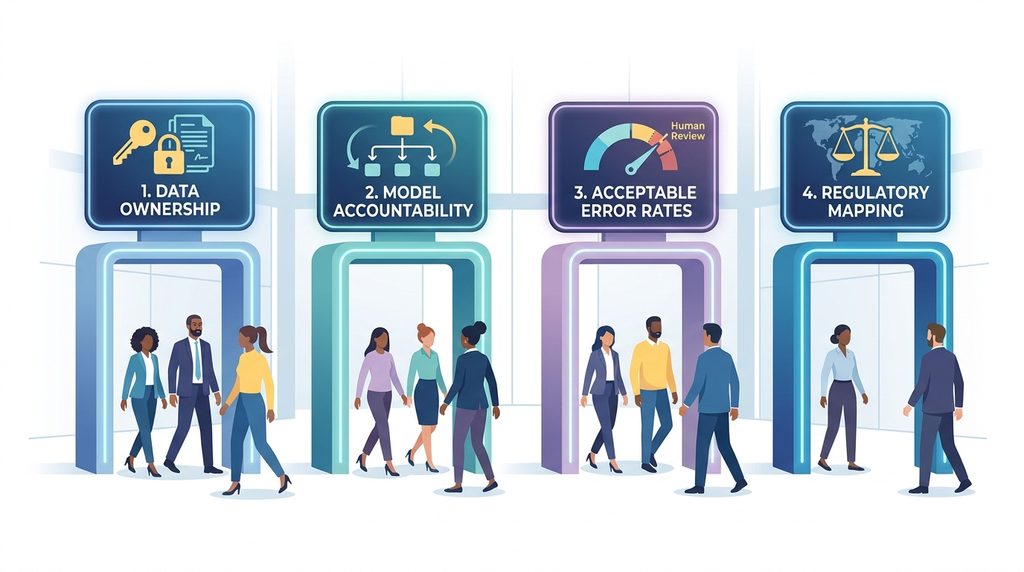
1. Who owns the data the model uses?
AI systems learn from data. If your custom AI solution uses customer records, transaction logs, or behavioral data, your board needs to formally establish data ownership, consent frameworks, and access boundaries before a single training run begins. This is not a legal formality. It is the foundation the model is built on. Change it later, and you may be rebuilding the model from scratch.
2. Who is accountable when the AI makes the wrong call?
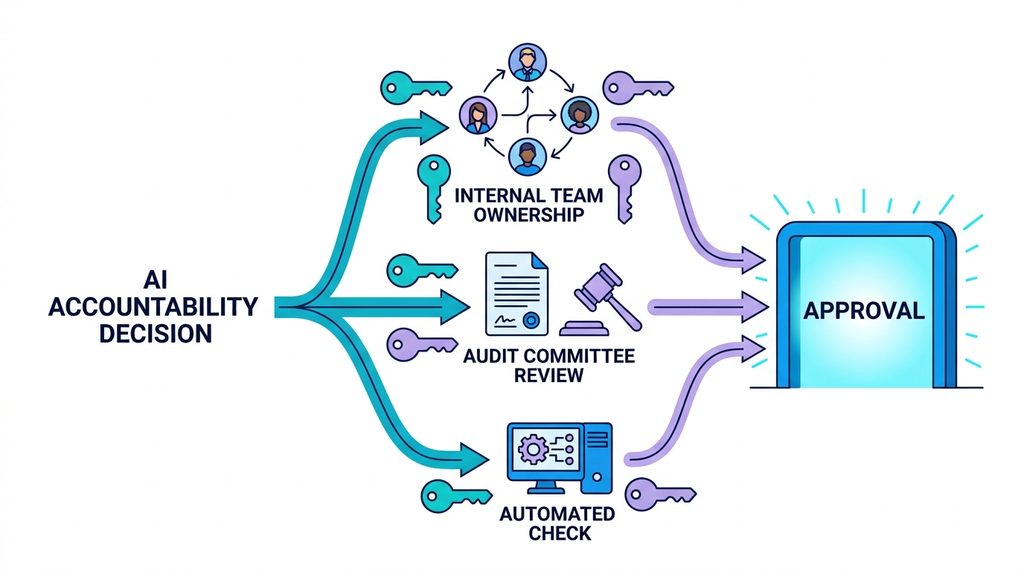
This is the question most organizations defer until it becomes a crisis. An AI agent that approves a pricing action, routes a customer complaint, or classifies a document is making a business decision. Someone in your organization needs to own the outcome of that decision, even when no human signed off on the specific instance.
3. What is the acceptable error rate?
No AI model is 100% accurate. Before development starts, your board should agree on the acceptable error rate for each use case, the threshold that triggers human review, and the escalation path when the model is uncertain. Introduct’s AI custom development engagements always include this specification as part of the initial requirements document.
4. What regulatory frameworks apply?
The EU AI Act is now in full effect. If your organization operates in any EU market, your AI systems need to be classified, documented, and in some cases audited. Similar frameworks are emerging in the Gulf, where Introduct operates through its Oman office. Regulatory mapping should happen before the architecture is finalized, not after.
What the EU AI Act requires before your AI project goes to production
The EU AI Act entered full application in 2026. If your organization operates in any EU market or processes data of EU residents, your AI system must be classified, documented, and, in some cases, audited before it can be deployed.
📌️️️️️️ Status as of November 2026: the EU AI Act is in full effect. High-risk AI system requirements apply from August 2026. GPAI model obligations apply from August 2025.
The classification that most enterprise AI projects need to understand first is the high-risk category. AI systems used in employment decisions, credit scoring, insurance underwriting, access to essential services, or critical infrastructure management are classified as high-risk under the Act and require a conformity assessment, technical documentation, and a human oversight mechanism before deployment.
The practical board question is: “If this AI system makes a decision that affects a person’s employment, finances, or access to a service, is it classified correctly?” A wrong classification is a deployment blocker.
For organizations operating outside the EU, similar frameworks are emerging. In the Gulf, Introduct’s Oman office advises clients on AI governance under emerging regional requirements. Regulatory mapping should happen before architecture is finalized.
What good AI development governance looks like in practice
At Introduct, our AI custom development projects are led in collaboration with Prof. Shahab Anbarjafari, whose background spans both scientific research and commercial AI applications. That combination is intentional. Good AI governance is as much about asking the right questions as it is about writing the right code.
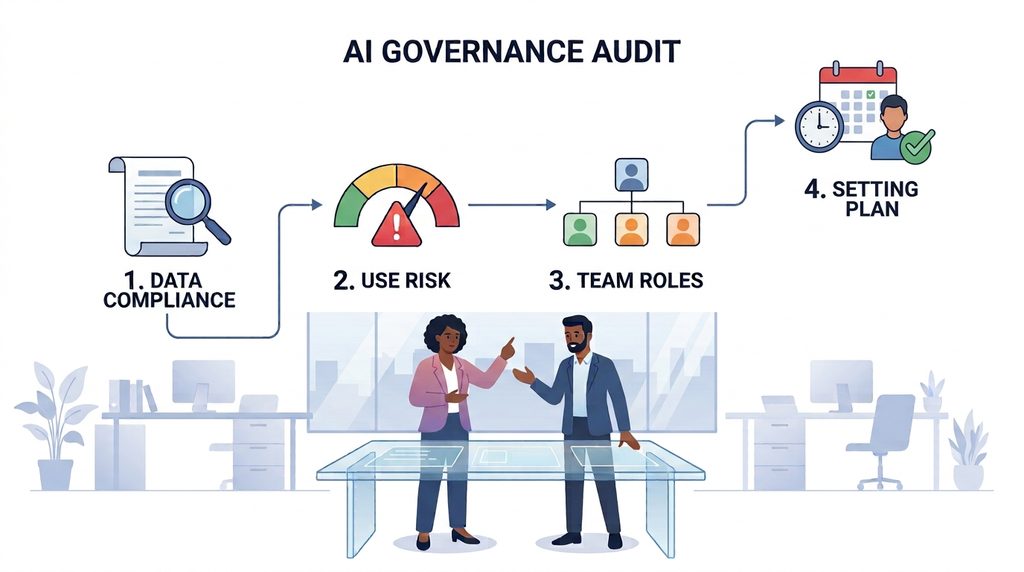
A well-governed AI project starts with a pre-development audit of four things: data sources and their legal status, the use case’s risk classification, the accountability structure, and the monitoring plan for after deployment. None of these take long to complete. All of them prevent expensive corrections later.
💡 Pro tip: If your board can’t answer “who reviews AI outputs in production and on what schedule,” you are not ready to start development. That question, unanswered, is where most AI projects accumulate their highest post-launch costs.
Start with the right questions. Introduct’s AI custom software development practice begins with a governance review. If you want to explore what that process looks like for your organization, contact the Introduct team.
More Articles

How to Build a Dedicated Development Team That Actually Ships How to Build a Dedicated Development Team That Actually Ships
You approved the headcount and signed the contract. And a few weeks later, your dedicated development team is producing reports on what they will build next sprint. Nothing has shipped. This happens more often than most vendors admit. The dedicated team model is genuinely powerful, but it fails in predictable ways. Understanding those failure points […]

Zero-Downtime Mainframe Modernization: The Parallel-Run Playbook Zero-Downtime Mainframe Modernization: The Parallel-Run Playbook
A core insurance platform goes down for four hours during a Tuesday cutover. Claims can’t be filed, and underwriting stalls. The modernization project that was supposed to make the company faster instead made the front page of a regulator’s incident log. This is the exact scenario zero-downtime mainframe modernization exists to prevent. And it’s the […]