




The Emperor’s New Code: Why Vibe Coding is Speedrunning Your Technical Debt


Building a web app by just talking to a computer feels like a shortcut. No syntax errors, no manual debugging, and no need to understand how Python or React actually work. This is “vibe coding” – a trend popularized by Andrej Karpathy. For a founder trying to get a prototype up in a weekend, it feels like magic.
But when you get past the demo, the speed breaks down.
The term “vibe coding” has become a buzzword nowadays; the same happened to AI some time ago. Comparing “vibe coding” to actual engineering is a kind of wrong move. The main problem is that you’re building a system you don’t understand, not a product.
The Data Doesn’t Lie
The math on this is bad. GitClear found that using unchecked AI leads to a fourfold increase in code duplication and a 41% spike in “churn”. This is actually the code you have to rewrite because the first version was structurally broken. Veracode found that 40% to 62% of AI-generated code contains critical security vulnerabilities.
Think of it like 3D printing a house overnight. Everything seems okay at first, but once the storm hits, it breaks completely. That happens because you skipped the foundation and the plumbing. That’s a very clear example of what happens to your code. When it comes to results, you understand that you’ll spend twice as much time debugging it if you don’t use Vibe coding. Feels like a fail.
The danger of vibe coding is the Last 10% Trap. AI is exceptionally good at generating the first 90% of a feature (the standard CRUD operations, the boilerplate, and the UI components). But these last 10% are everything (edge cases, race conditions, memory management, and security hardening). When you lack the fundamental knowledge to navigate that final 10%, you are effectively signing a promissory note for massive technical debt that will come due the moment your user base grows, or your requirements shift.
AI is not an Autopilot
Don’t let the AI drive. Use it as an assistant. As we know, AI doesn’t replace your job, despite all the fears. It helps when used correctly and with care.
Professional teams are moving toward “agentic engineering”. In this model, the AI handles the grunt work, but the human remains the architect. You define the structure, you write the tests, and you take accountability for the security and quality of what you receive in the end. In this case, you become a driver, not a passenger.
More Articles
The Agentic Token Trap: Why AI ‘Auto-Pilot’ is Bleeding Budgets The Agentic Token Trap: Why AI ‘Auto-Pilot’ is Bleeding Budgets
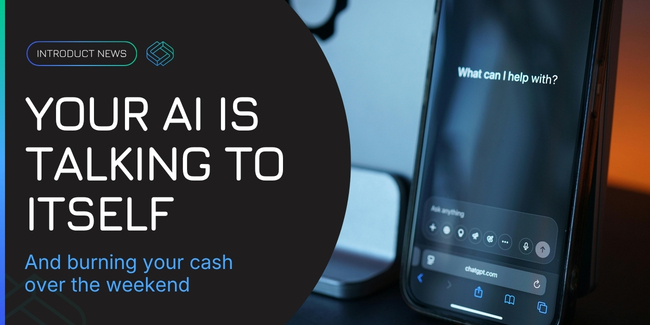
When tech industry leaders started suggesting that top engineers should be evaluated by how many “tokens” they consume, a dangerous corporate trend was born: tokenmaxxing. Maximizing AI usage has quickly become a misleading proxy for innovation and employee adoption. But a standard chatbot and an autonomous AI agent differ a lot when running on autopilot. […]

Resilient Logistics Middleware: Engineering Beyond the API Breaker Resilient Logistics Middleware: Engineering Beyond the API Breaker
When a global logistics platform drops for just ten minutes, the damage is rarely contained inside a server rack. In global trade, network latency is not a minor technical issue. Specifically, it is a physical bottleneck. If your platform loses connection to a customs API or a port gateway, shipping containers immediately begin to stack […]